

With just over 6,600 internal colleagues and about 1,400 external employees, we work day and night to keep energy flowing safely and reliably through our grids. An increasing share of the energy we deliver – and that our customers feed back into the grid – is renewable.
Enexis is a regional grid operator. Our most important task is to ensure that electricity and gas reach the right places safely and reliably: three million homes and businesses in the provinces of Groningen, Drenthe, Overijssel, Limburg, and North Brabant.
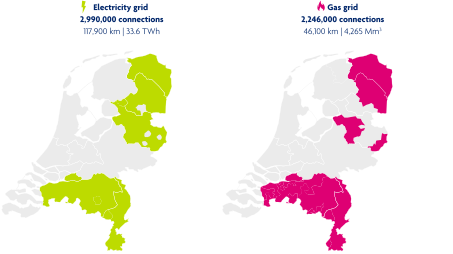
Building on this core responsibility, we work with governments, businesses, and households to drive the energy transition in our service area. We believe it is important to work together to build a sustainable energy system. Everyone contributes in their own way – whether by making homes more sustainable, developing wind and solar farms, or investing in electric transport and sustainable industry. Our energy grids are the backbone of this transition, laying the foundations for a CO2-neutral society by 2050.
What is the energy system of the future?
The energy system covers the production, storage, transmission, and use of energy, as well as the grid that connects these elements. The energy system of the future provides everyone with access to energy that is sustainable, reliable, and affordable, both now and in the long term. In light of recent geopolitical developments, it is essential that this future energy system does not rely on energy imports from other parts of the world, but instead uses locally available energy sources wherever possible.
By 2050 at the latest, the Dutch energy system must be CO₂-neutral, meaning it should no longer have a negative climate impact. This commitment has been agreed upon by the government, businesses, and civil society organisations in the Dutch Climate Agreement. Achieving this goal requires transitioning to sustainable energy sources such as biomethane, hydrogen, heat networks, and electricity generated by solar and wind, as well as a more flexible alignment of energy supply and demand. Phasing out natural gas and increasing local energy production will also reduce the Netherlands’ dependence on other countries for its energy supply.
You can find out more about our vision for a future-proof energy system here.
Safety is our top priority
Transmitting electricity, transporting gas, and operating our grids pose inherent risks to both the environment and our employees. That is why safety is at the core of everything we do. To prevent incidents, we closely monitor activity in our grids. We also adhere to strict safety standards and take precautionary measures to minimise risks to our employees and the environment. Our approach covers not only physical safety, but also social and digital safety.
Our organisation
Enexis Holding N.V. consists of various business units, each with its own area of focus. The organisation is led by the Executive Board. Our shareholders are the provinces and municipalities in our service area.
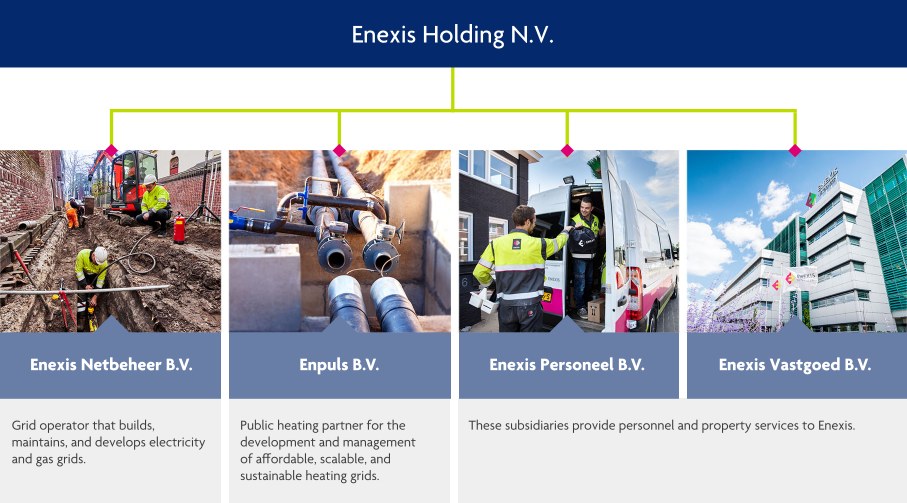
We focus on the efficient execution of our core tasks, which include five activities:
-
Connecting customers in our service area to our energy grids as quickly as possible.
-
Maintaining, upgrading, and replacing these grids and resolving outages.
-
Expanding the transmission capacity of the grids.
-
Working with provinces, municipalities, businesses, and other stakeholders to make socially responsible energy choices that balance reliability, affordability, feasibility, and support. We help shape and design the energy system of the future.
-
Ensuring that switching energy suppliers and managing energy flows run smoothly for customers and market players.
Our business unit, Enpuls Warmte Infra, focuses on developing, constructing, and managing district heating systems. We believe that heat, like hydrogen and biomethane, is an essential part of the energy system of the future.
Our role in the energy supply chain
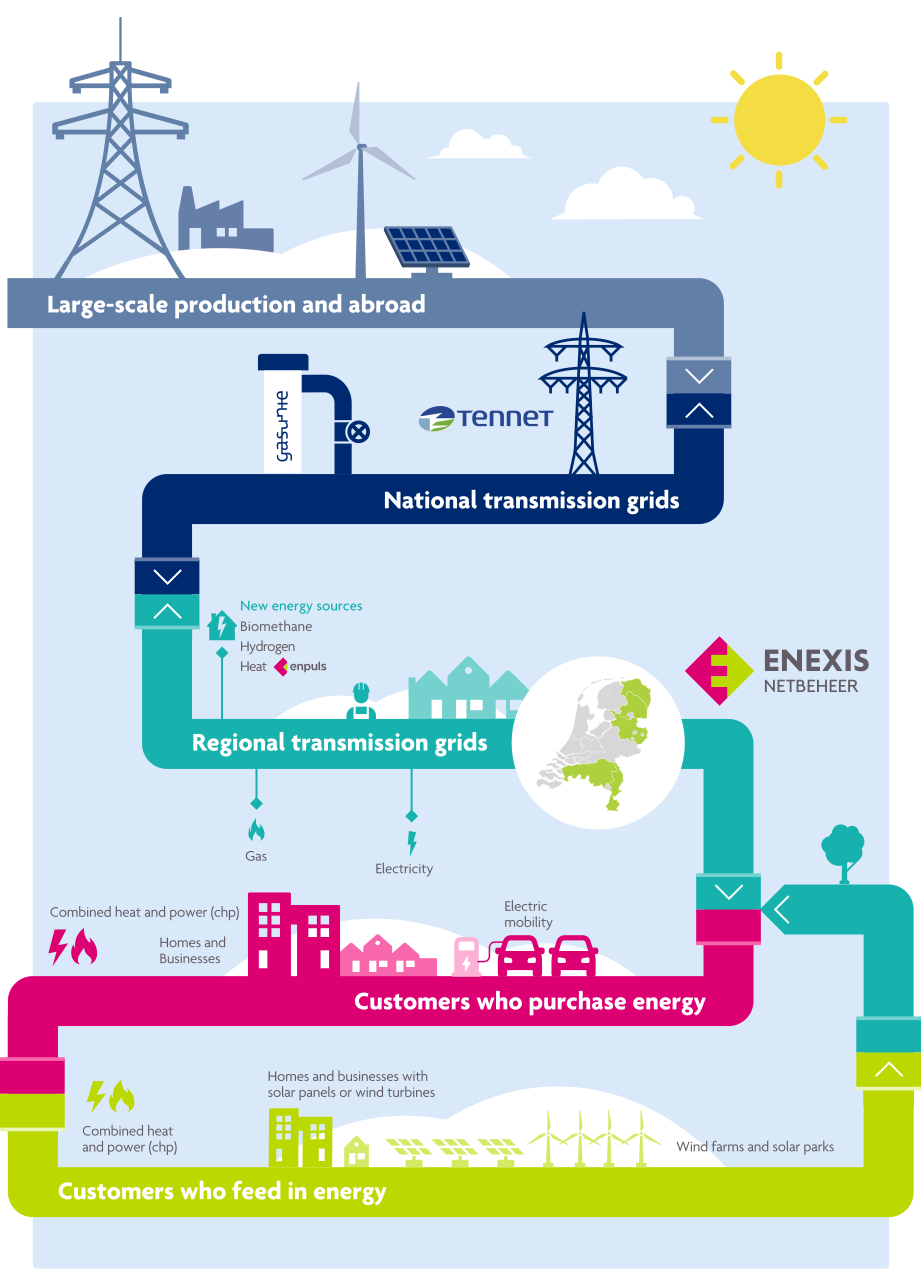
Enexis plays a vital role in the energy supply chain. We develop, build, manage, and maintain this network. This includes low-voltage and medium-voltage electricity grids, as well as regional gas networks.
Our goal is to keep energy flowing safely and reliably through the grid – day and night, all year round. Most of this energy comes from large power plants, wind farms, and solar parks in the Netherlands and abroad. TenneT and Gasunie transmit this energy via their national grids to our regional networks. Some of the electricity also comes from our customers. More and more households and businesses are generating their own electricity from wind, sun, waste, and combined heat and power systems, feeding it back into our grid. In fact, more than 1.2 million customers in our service area now have solar panels.
We are constantly working to make our energy supply more efficient and sustainable while maximising the capacity of our networks. This includes exploring technical solutions, alternative contract models, and the role of energy hubs. We are also looking at how the digitalisation of our grids and data analytics can help. This will allow us to expand grid capacity more efficiently, gain better insight into customer energy consumption, and encourage off-peak consumption.
CO2 footprint
Enexis makes its largest contribution to reducing CO₂ emissions in the Netherlands by enabling the supply of more sustainable energy. At the same time, we closely monitor and reduce our own CO₂ emissions. The visual below presents our CO₂ footprint. For more information on developments compared with last year and the measures we are taking to reduce emissions, please refer to the ‘Climate change’ section of the Sustainability Statement.