
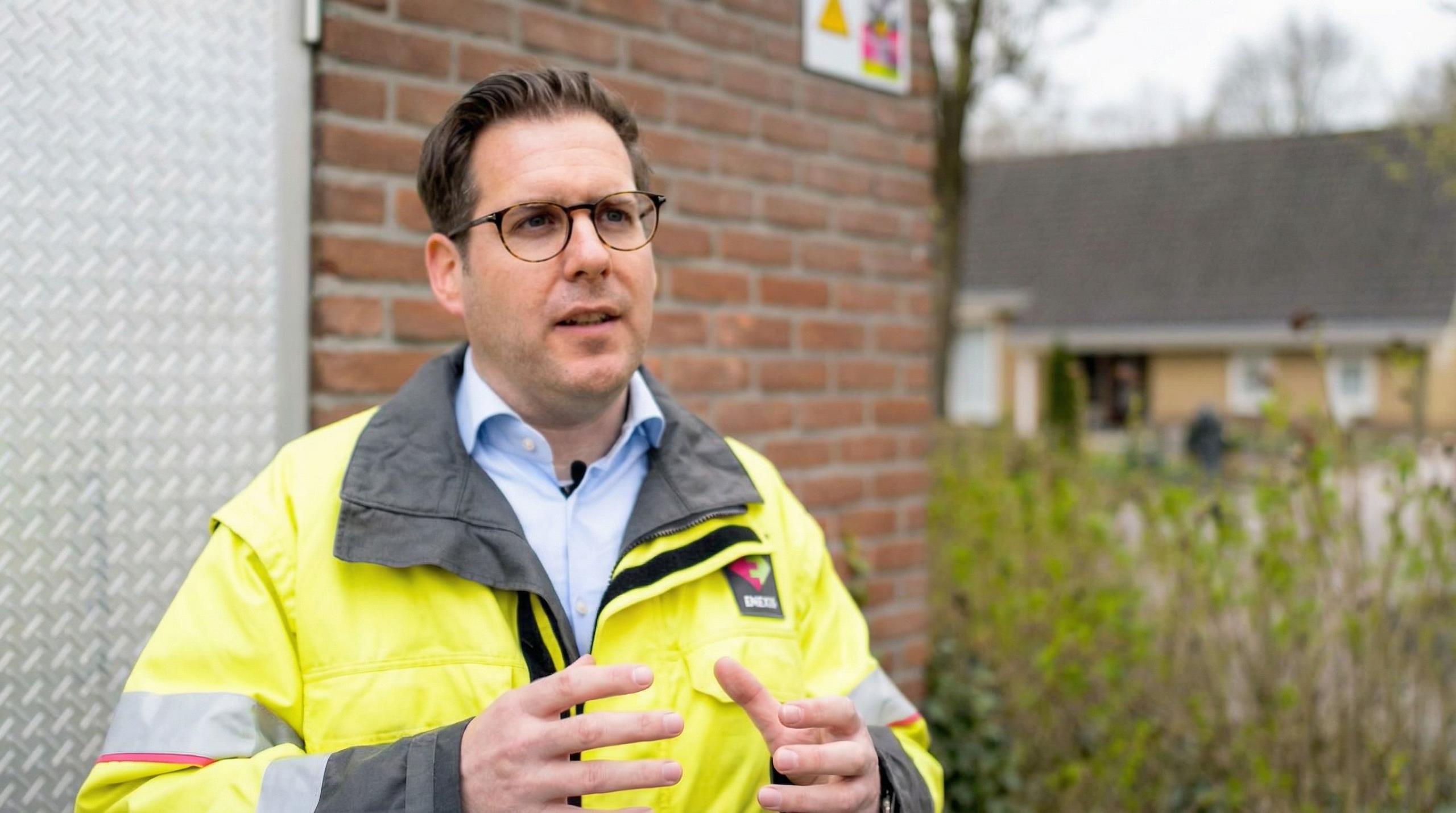
Can pressure on the electricity grid be reduced by remotely controlling hybrid heat pumps without residents noticing? Yes, as a pilot project in Dalen, Drenthe demonstrates. Enexis innovation manager Raymond van Hooijdonk explains: ‘If we roll this out on a large scale, the need for grid expansion will be significantly lower.’
The electricity grid is becoming increasingly congested. Electricity use is rising due to heat pumps, electric vehicles, and other appliances, while on sunny days, large amounts of solar power are fed back into the grid. The grid cannot always cope with these peaks. That is why we are investing heavily in grid expansion. At the same time, a grid that can be used without restriction at any moment would be too costly in terms of money, space, and time. Fortunately, there is a smarter alternative. On weekends, during the middle of the day, and at night, sufficient capacity is often available. By spreading electricity consumption more intelligently, this capacity can be used far more efficiently.
Major impact on the grid
Technology can help achieve this, as shown by a trial involving 100 households in Dalen. ‘Residents gave us permission to remotely control their hybrid heat pumps,’ says Van Hooijdonk. ‘During peak periods, we reduced or temporarily switched off the pumps. If needed, the gas boiler took over the heating of the homes. The impact was substantial: peak load fell by 10% to 25%. Just as importantly, there was no noticeable effect on living-room comfort and hardly any impact on energy bills.’
The fact that so few people used it shows the level of trust.
Tests with charging stations as well
The smart control system can also be applied to other equipment, such as home batteries and charging stations. ‘People often plug in their electric cars as soon as they get home from work,’ Van Hooijdonk explains. ‘Charging starts immediately, which creates a sharp peak in electricity demand. By remotely delaying charging until the night, we can make much better use of available capacity. As long as the car is fully charged by morning, residents do not notice any difference.’
Speaking the same language
Remote control of electrical appliances, therefore, enables more efficient use of the grid. This applies not only to heat pumps and charging stations, but also to appliances such as washing machines and tumble dryers. ‘For grid-aware energy use to work properly, devices must be controllable and based on standard protocols,’ says Van Hooijdonk. ‘In Dalen, we worked with Intergas on their boilers and heat pumps, for which they developed dedicated software. Ultimately, however, devices need to speak the same language so they can work together intelligently, regardless of brand.’
Government must take the lead
According to Van Hooijdonk, the government has a key role to play. ‘It can provide clarity by working with the market to determine which standards will be used. The willingness is there on all sides. Everyone recognises that conscious energy use helps address grid congestion. We have shared the insights from the Dalen pilot with the ministry. They clearly show what is already possible and what still needs further development.’
Consumer confidence is essential
Consumer support and trust are also crucial. ‘Residents must be properly informed, and control must always remain in their hands. In Dalen, residents could temporarily opt out using a button. That button was rarely used, typically only to verify it worked. The fact that so few people used it shows the level of trust. Without that trust, grid-aware energy use simply will not succeed.’