
Water, electricity, gas, fibre-optics. Cable companies and contractors are competing for limited underground space. All this underground activity is also causing disruption above ground. In Roermond, the municipality was receiving an increasing number of complaints from residents and businesses about open streets and inadequate communication. For this reason, the municipality and Enexis decided to strengthen their cooperation, with the aim of minimising disruption and improving communication.
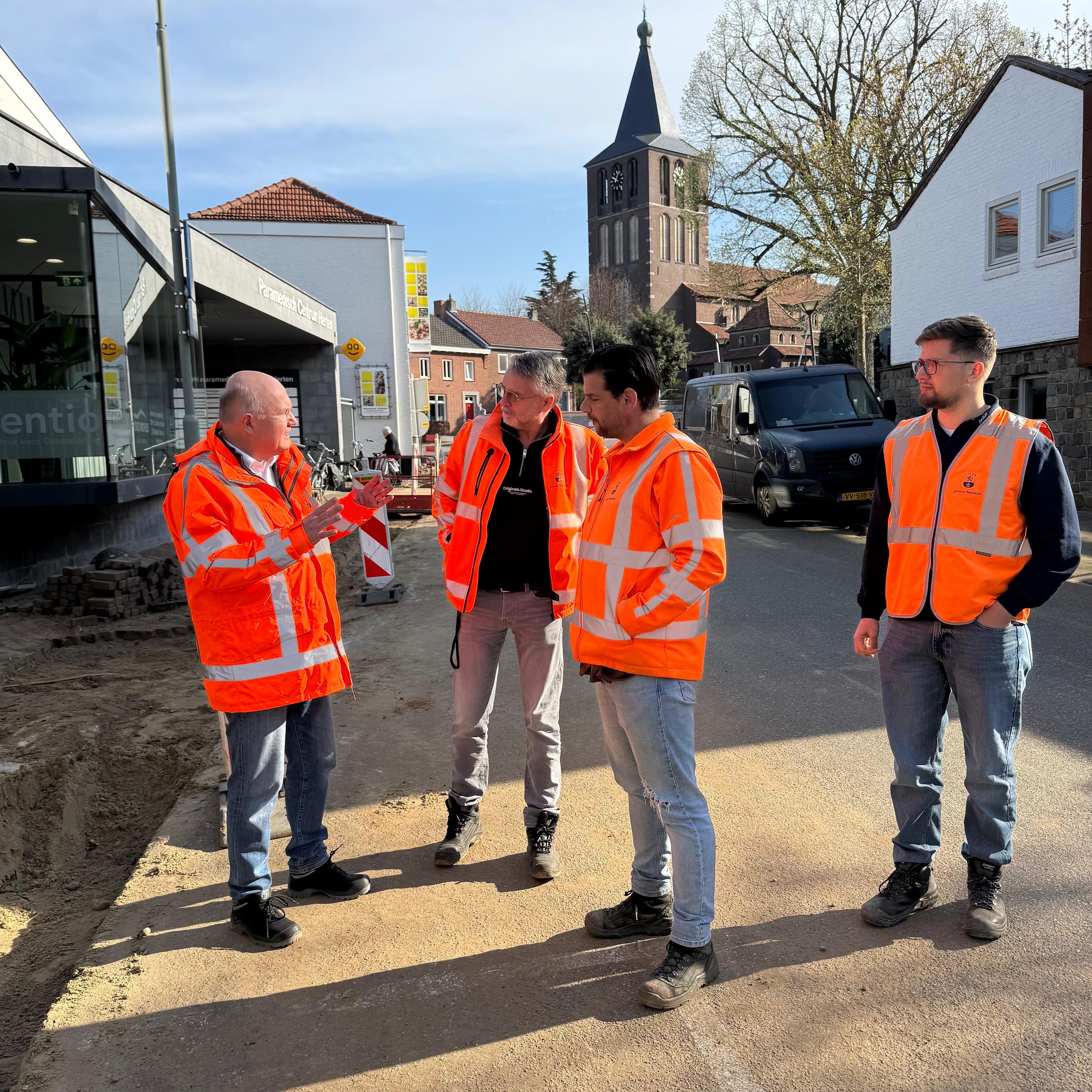
‘We want people to enjoy living and working here,’ says Vincent Zwijnenberg, Roermond’s councillor for urban management, accessibility, and services. ‘But we noticed that the scale of construction work in our municipality was starting to have a negative impact on that. Extensive underground works mean that pavements and roads are frequently opened up, often followed by above-ground work to restore the historic cityscape.’ While Enexis is not the only party working underground in Roermond, it is the largest. As the municipality began receiving a growing number of complaints about accessibility from residents, businesses, and visitors, it reached out to Enexis. Zwijnenberg explains: ‘Contractors are required to inform local residents well in advance, but not all letters arrived, some were discarded, or the message simply did not get through.’
This also makes the work easier for contractors.
Mirroring work processes
The situation highlighted a broader issue: how can a municipality gain better control over activities above and below ground in order to minimise disruption for residents? In response, the municipality of Roermond established a new department for Underground Public Space Management (Inrichting Beheer Ondergrondse Openbare Ruimte, IBOOR). Zwijnenberg explains: ‘We sat down with Enexis to streamline our cooperation. We compared our processes side by side and then took concrete steps to provide Enexis with the support they needed.’
Coordinating efforts
The municipality of Roermond and Enexis closely monitor developments through regular strategic consultations. During these discussions, both organisations present their plans and challenges. ‘Strengthening the grid alongside everything else happening in the public realm, such as housing development, road safety, and greening, is a complex operation,’ Zwijnenberg explains. ‘In a major redevelopment project such as Drie Wijken Zuid, which covers the neighbourhoods of Merum, Herten, and Roer-Zuid, adjustments to the electricity grid also need to be carried out in a specific sequence. Otherwise, the renovation programme risks being delayed. We are keen to take Enexis’ needs into account in this process, as this is also part of our role as a municipality.’
Information via QR code
The collaboration between the municipality and Enexis has proven highly effective. ‘We now work faster, more efficiently, and in a more targeted way,’ says Zwijnenberg. Communication issues have also been resolved. In areas where work is underway, information boards now display a QR code. When scanned, the code directs road users to the municipality of Roermond’s website, where they can find comprehensive project information, from planning and scheduling to implementation. ‘This also makes things easier for contractors, as they encounter fewer frustrations from residents during implementation,’ Zwijnenberg adds.
An open mind
Other municipalities have shown interest in the collaboration between Enexis and Roermond. ‘We discuss it within the Association of Netherlands Municipalities, and individual municipalities also approach us with questions,’ says Zwijnenberg. He emphasises the importance of an open attitude among administrators: ‘For the energy transition, it is essential to remain open to practical solutions.’