
Since 2025, Enexis and the Municipality of Groningen have been working together in an integration team. This collaboration enables the medium-voltage and low-voltage grids in the municipality to be expanded more quickly and in a more coordinated way. From an early stage, the team brings together disciplines such as the energy transition, technology, spatial planning, permitting, and implementation.
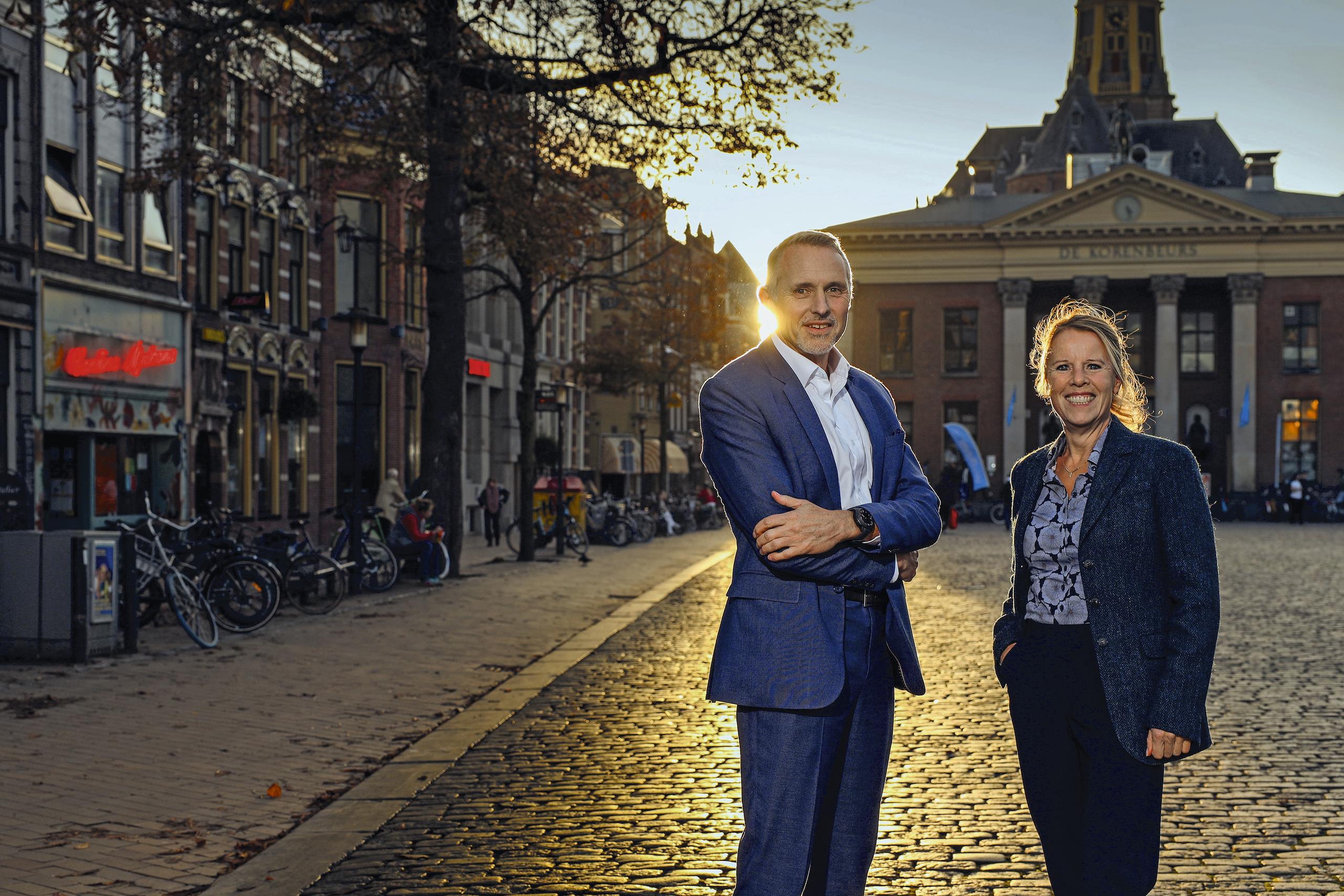
Enexis and Groningen established the integration team to accelerate grid expansion and strengthen cooperation. ‘We face a major task in expanding the grid and limiting congestion as much as possible,’ says Annemiek Berends, Energy Systems & Environment Manager for the Northern Netherlands. ‘As a grid operator, we sometimes wanted to make different choices than the municipality. Those differences occasionally led to delays.’ Richard Lombaerts, Director of Urban Development at the municipality of Groningen, adds: ‘By working together in a single team, the municipality and the grid operator get to know each other better. That makes it easier to take each other’s interests into account. Understanding each other’s working methods and challenges speeds up the process.’
Permanent team, with room to expand
Enexis participates in the integration team with staff from the Energy Systems & Environment. ‘The core team includes an environmental lawyer, a planner, and an environmental manager, Berends explains. ‘When needed, other specialists join, for example from Production or Asset Management.’ The municipality is represented by a project leader and specialists, including urban planners, planning lawyers, and city engineers. ‘If required, the team can also be expanded on the municipal side,’ says Lombaerts.
Faster decision-making
One of the integration team’s early successes was identifying a suitable location for a medium-voltage substation. ‘Without the integration team, obtaining a permit would have been much more difficult,’ Berends notes. ‘In the past, permits could sometimes be rejected at a late stage if a choice turned out to be problematic for the municipality. By then, preparations were already complete, and we had to start again. With the integration team, we avoid that. Having the right expertise at the table allows us to reach decisions more quickly, and because shared interests are considered from the outset, the permitting process runs more smoothly.’
Healthy discussion
Lombaerts views the collaboration positively. ‘Of course, there are occasional tensions. That’s inevitable given the different interests of Enexis and the municipality. But open discussion is healthy, and so far we have always found solutions together. For example, we might not like the aesthetics of medium-voltage substations, but we also recognise that they are necessary.’
Berends agrees: ‘Collaboration is about finding the right balance. Take planning: Enexis works according to a specific sequence, which can sometimes conflict with municipal preferences. By discussing this openly within the team, mutual understanding grows.’
The first four locations
As a result of the integration team’s work, Enexis and the municipality of Groningen have developed a joint work plan with a schedule extending to 2035. ‘Together, we have identified the locations for the first four medium-voltage substations,’ says Lombaerts. ‘In total, 14 substations will be needed.’